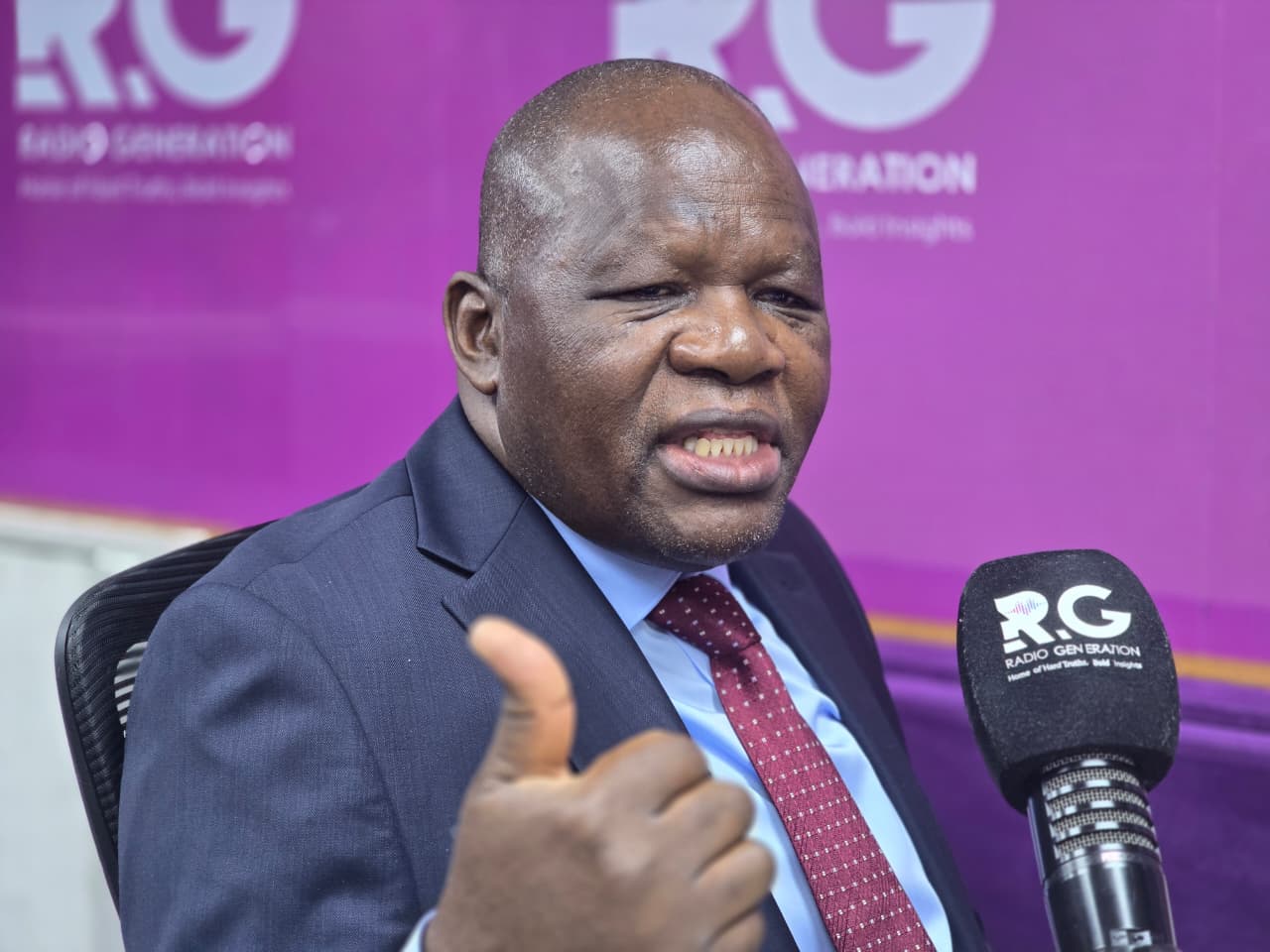
Policy and Political Analyst Odoyo Owidi claims Kenya’s politics are shaped more by personalities and narratives than policy, faulting voters for prioritising identity over development, urging a shift toward governance and accountability, and warning that misinformation is eroding meaningful public debate.
Speaking during a Radio Generation interview on Wednesday, Owidi argued that leadership discussions in the country are often shaped by ethnic identity and emotional appeal rather than measurable performance and national interest.
He said holding high office does not automatically translate into influence within one’s community. “If you can have the biggest post and you are a Luo, it will not make you a leader of the Luo people,” he stated.
Owidi emphasised that political elevation at the national level is often tied to perceived delivery and broader public confidence.
The analyst expressed concern that Kenyan voters frequently prioritise personalities over policy issues during elections.
“Our communities are largely voting on very issues, rather than economic issues,” he said, noting that citizens rarely interrogate leaders on critical sectors such as healthcare, infrastructure, and governance.
“We should be asking what we are voting for, as opposed to who we are voting.”
The analyst also criticised the tendency of communities to rally behind individuals from their regions without evaluating the substance of controversies surrounding them.
Referring to recent scandal debates in the energy sector led by CS Opiyo Wandayi, he said such reactions are often emotional rather than rational. “It’s emotional, it is not his job, not community,” he remarked, urging a shift toward fact-based evaluation of public officials.
Owidi warned that lack of clear and transparent communication from authorities contributes to widespread speculation and misinformation.
“If you just throw in a statement, you’ve given us permission to speculate,” he said, calling on institutions to better explain processes and decisions to the public.
On development, he reinforced the importance of infrastructure in driving economic growth, pointing to the historical impact of road networks in expanding urban centres and boosting trade.
He added that infrastructure development has historically transformed regions by improving connectivity and attracting investment, noting that transport systems and institutions play a central role in economic expansion.
However, he warned that political resistance to development in certain areas undermines national progress.
Owidi further criticised what he described as the dominance of “hardcore politics” in everyday discourse, saying it leaves little room for meaningful discussions on governance and development.
“Every day as we wake up, you’re breathing hardcore politics,” he said, adding that both government and opposition often fail to articulate clear policy alternatives.
On governance and civil liberties, Owidi defended Kenya’s democratic space, suggesting it compares favourably with other countries in the region.
At the same time, he acknowledged ongoing concerns about alleged self-abductions of former CS, Raphael Tuju and Juja MP George Koimburi and extrajudicial actions, though he maintained that such claims remain legally unproven. “Nothing has been proven in court,” he said, adding that political actors may exploit such incidents to shape public perception.
He concluded by warning that propaganda and entrenched narratives continue to dominate Kenya’s political space, making it difficult for citizens to access the objective truth.
“The moment you politicize an issue, the truth has gone,” he said, calling for a shift toward fact-driven conversations and policy-focused leadership.